How to Prune Mature Trees Like a Pro Without Damaging Them
Pruning a mature tree is a bit like tidying a very old, very valuable room: one wrong move and the whole balance feels off. Done well, though, it keeps the tree safer, healthier, and more attractive for years. If you have ever stood under a large branch and wondered whether to cut, thin, lift, or leave it alone, you are exactly who this guide is for.
In this article, we will walk through how to prune mature trees like a pro without damaging them, from choosing the right cuts to spotting the signs that a tree should be left alone or handled by a qualified tree surgeon. We will keep it practical, UK-friendly, and refreshingly free of fluff. No guesswork. No dramatic hacking at branches with optimism and a ladder.
One thing worth saying early: mature trees are not just "big trees". They are established living systems with stress points, decay zones, and growth patterns that react to every cut. So the aim is not to "take a bit off"; it is to prune with judgement.
Table of Contents
- Why Proper Pruning Matters
- How Mature Tree Pruning Works
- Key Benefits and Practical Advantages
- Who This Is For and When It Makes Sense
- Step-by-Step Guidance
- Expert Tips for Better Results
- Common Mistakes to Avoid
- Tools, Resources and Recommendations
- Law, Compliance, Standards, or Best Practice
- Options, Methods, or Comparison Table
- Case Study or Real-World Example
- Practical Checklist
- Conclusion
- Frequently Asked Questions
Why How to Prune Mature Trees Like a Pro Without Damaging Them Matters
Mature trees are where pruning mistakes become expensive. A young sapling can often recover from a poor cut. A mature oak, maple, cherry, lime, or conifer may respond very differently, and not always kindly. Damage can show up slowly: dieback, weak regrowth, sunscald, decay entering through a large wound, or a stressed crown that never quite looks right again.
Proper pruning matters because mature trees are already working hard. Their root systems support a large canopy, they are managing wind loading, and they may be living close to buildings, driveways, fences, patios, or public paths. You are not just shaping the tree. You are managing risk, structure, light levels, and long-term health at the same time.
It also matters for the wider garden. A mature tree can shade turf, suppress planting beneath it, block views, or crowd nearby structures. But that does not mean heavy cutting is the answer. More often, selective pruning gives you the result you want without turning the tree into a stressed shell.
In our experience, the best pruning decisions are the ones that respect what the tree is already doing. That sounds obvious, but honestly it is where many jobs go wrong. The tree is not a hedge. It does not want to be flattened into obedience.
If your garden also has dense boundary planting or climbing plants wrapped around mature stems, it can help to understand the bigger picture. For example, safe ivy removal often goes hand in hand with tree inspection and pruning decisions, while tidy boundary planting such as fast-growing hedges for privacy can reduce the temptation to overwork a tree just to create screening.
How How to Prune Mature Trees Like a Pro Without Damaging Them Works
Good pruning works with tree biology, not against it. Mature trees compartmentalise wounds rather than "healing" them in the human sense. That means every cut becomes a managed area of response. The smaller and cleaner the cut, the easier that response tends to be.
The basic aim is to remove the right wood in the right way for the right reason. That usually means one of four actions:
- Removing dead, diseased, or broken branches to reduce hazard and decay spread.
- Thinning selected branches to improve light, airflow, and structural balance.
- Reducing weight or length on a limb without creating a poor stub cut.
- Raising the crown for clearance over paths, lawns, drives, or structures.
The important part is that pruning is selective. A mature tree should rarely be "stripped back" because you fancy a neater silhouette. Once too much leaf area is removed, the tree loses its food-making capacity. That can trigger stress growth, weak shoots, and a messy flush of water growth that needs more pruning later. A bit of a trap, really.
Tree structure matters too. Branches should usually be cut back to a branch union, a lateral branch, or a natural growth point. Random stubs are where trouble starts. A proper pruning cut lets the tree seal off the wound more efficiently and keeps decay from travelling too far into the limb.
Timing matters as well. Some trees tolerate winter pruning well; others are better left until late summer or after flowering. Species, condition, weather, and location all influence the best approach. There is no universal "prune everything in February" rule, despite what people sometimes assume after a brisk Saturday in the garden.
Key Benefits and Practical Advantages
When done correctly, pruning mature trees pays you back in several ways.
- Better safety: removing deadwood or weakly attached limbs reduces the chance of failure in wind or heavy rain.
- Improved structure: careful pruning can help a tree keep a balanced framework, especially if it has competing stems or awkward crossing branches.
- More light: a sensitively thinned crown can brighten shaded borders, lawns, patios, or seating areas.
- Less friction damage: branches rubbing together can create wounds, which are an open invitation to pests and decay.
- Longer life expectancy: thoughtful intervention reduces stress and supports stable growth.
- Better garden use: your outdoor space feels calmer and easier to live in when mature trees are managed rather than left to sprawl unchecked.
There is a quieter benefit too: confidence. Once you understand the structure of a mature tree, you stop seeing pruning as a gamble. You start seeing it as a measured maintenance task. That shift matters.
And yes, good pruning can make a garden feel more intentional. If you are also refining the rest of the space, articles on garden seating ideas and creating a calm outdoor retreat can help you plan around the tree rather than against it.
Who This Is For and When It Makes Sense
This guide is for homeowners, landlords, property managers, and keen gardeners who need to maintain mature trees without causing harm. It is also for anyone who has inherited a garden full of established trees and does not want to make a costly mistake in the first year.
Pruning may make sense when:
- branches are dead, broken, or hanging low over a walkway
- the canopy is too dense and blocks too much light
- limbs are growing into buildings, gutters, fences, or power lines
- the tree has crossed branches or obvious structural imbalance
- the crown needs a modest reduction after storm damage
- you are maintaining clearance for access, parking, or lawn care
It may not make sense if the tree is already stressed, recently transplanted, heavily diseased, or protected by a Tree Preservation Order. In those cases, pause. Assess first. A mature tree is often happier with restraint than enthusiasm.
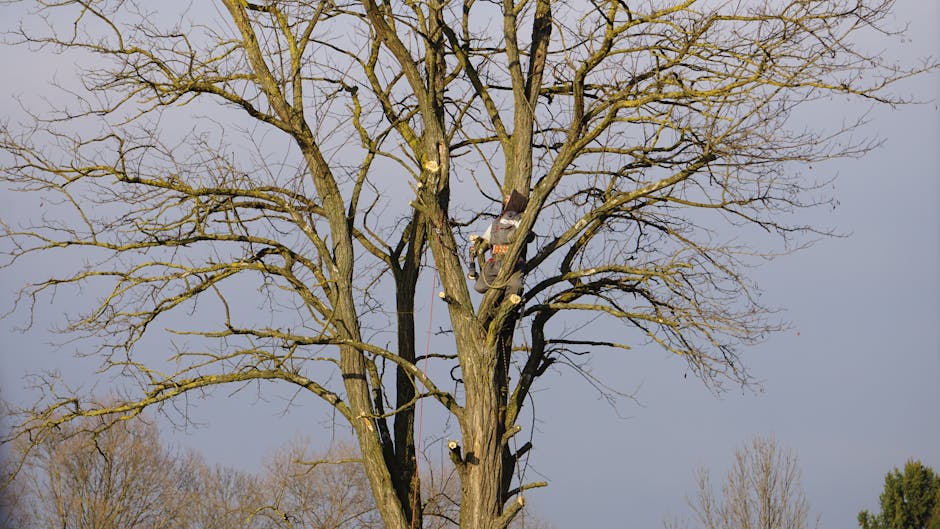
Some situations are best handed to a specialist. If the tree is very tall, has extensive deadwood, shows fungal fruiting bodies, leans suddenly, or sits close to a building, then professional help is the safer choice. Services such as tree surgery exist for exactly this kind of more technical work, where climbing, rigging, and risk management matter.
Step-by-Step Guidance
Let us keep this practical. Here is a sensible, low-drama method for pruning mature trees without doing damage.
1. Start with a slow inspection
Walk around the tree and look from a distance first. Then move closer. Check for deadwood, cracks, crossing limbs, signs of decay, fungal growth, included bark, and branches that are too close to structures. A mature tree often tells you where the priorities are if you bother to look properly.
2. Decide your goal before cutting
Ask yourself: am I improving safety, reducing weight, lifting the crown, or letting in light? If you cannot answer that clearly, stop. "It looks messy" is not a pruning objective.
3. Remove dead, damaged, or diseased wood first
These are the obvious candidates. Cut back to healthy tissue or the branch collar where appropriate. Keep cuts clean. No ripping, no tearing, no leaving long stubs. Small detail, big difference.
4. Reduce crossing and rubbing branches
When branches rub, the bark gets damaged and decay often follows. Choose one branch to keep and remove the weaker or poorly placed one. Be selective, not aggressive.
5. Thin only where it genuinely helps
Light selective thinning can improve air movement and reduce wind resistance. But thinning is not the same as opening every canopy gap you can see. A mature tree still needs leaf area to function. Think "strategic," not "spare parts aisle".
6. Make reduction cuts correctly
If a branch is too long or heavy, reduce it back to a lateral branch that is large enough to take over growth. Avoid lion-tailing, which is the habit of leaving foliage only at the ends of branches. It looks dramatic for about five minutes and then starts causing problems.
7. Respect the tree's natural shape
Every species has a typical form. A mature beech, for instance, should not be forced into the same style as a box hedge. Prune to preserve the architecture of the tree rather than impose a shape that fights against it.
8. Step back often
After each major decision, stop and look again. Trees read better from a distance. This is the moment where you notice if one side has become too light or if the canopy is starting to look oddly lopsided. Very easy to miss while you are working close up.
9. Keep cuts modest
For mature trees, less is usually more. If you need to remove a large amount, spread it over more than one season where appropriate. Heavy reduction in one go can be too much stress.
10. Clean up and monitor
Remove arisings, check the tree for any loose hanging material, and monitor it over the following months. A tree can respond slowly. New growth, dieback, or sudden exposed weak points may only become obvious later.
Expert Tips for Better Results
These are the little things that separate a careful job from a decent-looking mess.
- Prune in dry weather when possible. Wet conditions are not ideal for handling large tools or for making neat cuts.
- Use the branch collar as your guide. That swollen area at the base of a branch is where the tree is best equipped to manage the wound.
- Avoid topping. Topping is one of the most damaging practices on mature trees. It creates weak regrowth and often ruins the natural form.
- Do not overthin the crown. Wind can pass through a moderate canopy, but an over-thinned tree may react badly and look sparse for years.
- Watch the tree after storms. Mature trees exposed to wind or heavy rain may reveal weaknesses that were not obvious before. If your garden is in a gusty spot, pairing tree work with ideas from wind protection for gardens can help reduce future stress.
- Consider the whole site. A tree near a patio or lawn may need different treatment than one standing in an open field. If you are also improving hard landscaping, patio cleaning and lawn care may be part of the wider maintenance picture.
A small but useful habit: take photos before you start. Not glamorous, I know. But when you step back after pruning, those photos help you remember the original balance and stop you from "just taking a bit more off." Which, to be fair, is how a lot of tree work gets out of hand.
If you are maintaining a wider garden rather than just one tree, regular garden maintenance planning can keep pruning jobs from becoming a once-every-five-years panic.
Common Mistakes to Avoid
This is where most damage happens. The mistakes are usually not dramatic, just repeated too many times.
- Taking off too much at once. Mature trees need foliage to generate energy.
- Making flush cuts. Cutting too close to the trunk can damage the collar and slow proper wound response.
- Leaving long stubs. Stubs often die back and become decay entry points.
- Using blunt or dirty tools. Ragged cuts and disease transfer are a bad combination.
- Ignoring species differences. Different trees respond differently to pruning timing and intensity.
- Overreaching with a ladder. If the job needs awkward stretching, it probably needs a safer setup or a professional.
- Pruning without a plan. Random cuts can make the canopy unstable and oddly shaped.
Another common error is confusing pruning with trimming. Trimming is often used for smaller, denser plants or hedges. Mature trees need structural judgement. If your garden also contains hedging, it may help to compare approaches with hedge trimming styles so you can keep the two tasks separate in your mind. They are not the same job.
Tools, Resources and Recommendations
You do not need a mountain of equipment, but the tools you do use should be sharp, clean, and suitable for the job.
| Tool | Best use | Why it matters |
|---|---|---|
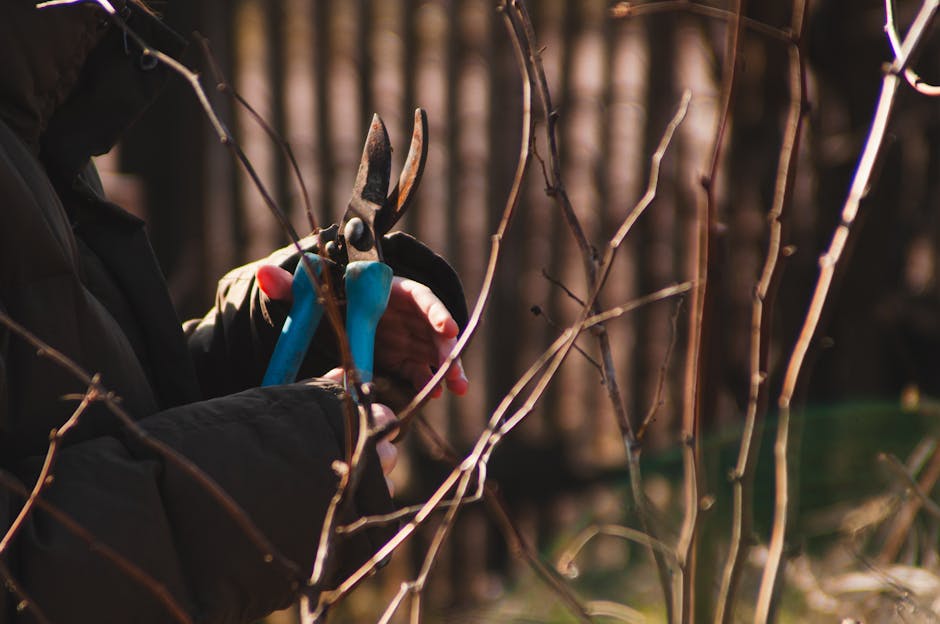
| Hand secateurs | Small live shoots and light twig removal | Gives clean cuts on thin material |
| Loppers | Medium branches out of easy reach | Useful for controlled leverage |
| Pruning saw | Thicker branches | Cleaner than forcing loppers beyond their limit |
| Pole pruner | Higher branches at safer distance | Helps reduce overreaching, though skill still matters |
| Gloves and eye protection | General pruning safety | Protects hands and eyes from splinters and debris |
| Securing kit or climb equipment | Advanced tree work | Only for trained users and higher-risk jobs |
Beyond tools, the best resource is a calm, methodical approach. If the tree is large enough that you need climbing access, rigging, or traffic awareness, the sensible route is to use professional gardening services or specialist tree surgery rather than improvising.
For homeowners who are refreshing the whole outside space, a useful next step is to browse practical planning articles such as designing a budget-friendly garden or reviving a neglected garden. Trees sit inside a bigger design. They do not live in a vacuum, even if they sometimes behave like they own the place.
Law, Compliance, Standards, or Best Practice
In the UK, mature tree pruning can involve more than garden judgment. Trees may be protected by a Tree Preservation Order, sit within a conservation area, or be subject to site-specific conditions. If you are unsure, check before you cut. That is the safest and most practical habit.
There is also a broader duty of care. If a tree could affect neighbours, passers-by, parked vehicles, or shared access routes, you should treat pruning as a safety matter, not just a cosmetic one. Good records help here: note what was done, when, and why.
Best practice usually includes:
- using trained, competent people for large or hazardous work
- carrying out a visual inspection before pruning
- avoiding excessive crown reduction unless clearly justified
- keeping equipment maintained and suitable for the task
- working with local wildlife sensitivity, especially during nesting periods
If you are commissioning work, it is sensible to ask about insurance, safety processes, and how waste will be handled. Pages such as insurance and safety, health and safety policy, and terms and conditions are useful trust signals when you are comparing providers. You can also review payment and security and privacy policy if you are arranging a service online.
One more thing: if a tree is close to boundaries and the pruning may affect neighbouring land, communicate early. It avoids awkward conversations later. Nobody likes discovering a branch pile on a shared edge after the fact.
Options, Methods, or Comparison Table
Different pruning methods serve different goals. Choosing the wrong one is where damage creeps in.
| Method | Best for | Main risk if overdone | Good practice |
|---|---|---|---|
| Deadwood removal | Safety and cleanliness | Minimal if limited to dead material | Remove only clearly dead branches |
| Thinning | Light, airflow, wind movement | Overopening the canopy | Take out selected branches, not clusters |
| Reduction pruning | Controlling spread or weight | Bad stubs or lopsided regrowth | Cut back to a suitable lateral branch |
| Crown lifting | Clearance over paths and lawns | Raising the crown too high | Keep enough lower canopy for balance |
| Crown reduction | Limited size control | Topping-like stress and weak shoots | Keep cuts selective and conservative |
For most mature trees, deadwood removal plus selective thinning is enough. Reduction or lifting should be used carefully and with a clear reason. If the tree has already been badly cut in the past, the first priority is often not more correction, but stabilising the structure and avoiding further stress.
Case Study or Real-World Example
Here is a typical scenario. A mature lime tree in a suburban garden has begun shading the lawn and pressing into a neighbouring fence. The owner wants "a good chop back" so the space feels brighter. On first inspection, though, the tree has a healthy crown, a few crossing branches, and a pocket of deadwood on the upper east side.
Rather than cutting back hard, the better approach is:
- remove the deadwood first
- take out the worst crossing limbs
- slightly reduce a couple of long laterals to rebalance the crown
- lift only a small number of low branches for clearance
- leave enough canopy to keep the tree vigorous
The result? Better light, less friction against the fence, and a tree that still looks like a tree. Not a lollipop. Not a tortured sculpture.
That is really the heart of mature tree pruning. The best outcome is often invisible to the untrained eye. It feels calmer, lighter, safer, and more natural, which is exactly how good work should feel.
Practical Checklist
Use this before you make the first cut.
- Have I identified the species and its likely pruning response?
- Is the tree healthy enough to prune right now?
- Do I know the purpose of the pruning?
- Have I checked for protected status, neighbours, or access issues?
- Are the tools sharp, clean, and appropriate?
- Am I removing dead, damaged, or crossing branches first?
- Am I keeping cuts small and deliberate?
- Have I avoided topping and excessive thinning?
- Will I need professional help for height, decay, or instability?
- Have I planned aftercare and monitoring?
If you can answer "yes" to most of these, you are on the right track. If not, pause. Trees are patient, and frankly that is one of their better qualities.
Conclusion
How to prune mature trees like a pro without damaging them comes down to restraint, observation, and respect for the tree's structure. The goal is not to force a shape or strip away problem branches by the handful. It is to make targeted cuts that improve safety, support health, and preserve the tree's natural character.
Once you understand how mature trees respond, pruning stops feeling like a gamble. It becomes a thoughtful part of garden care, one that protects the tree instead of putting it under pressure. That is the difference between a quick cut and proper tree stewardship.
If your mature trees are getting difficult to assess, or if you would rather have an experienced team handle the higher-risk work, speak with a local professional who understands tree structure, site conditions, and safe working practices. Learn more about the team behind the service and, if you are ready to discuss your garden, get in touch here. Sometimes the smartest move is the one that keeps the tree, and your peace of mind, intact.
Get a free quote today and see how much you can save.
Frequently Asked Questions
What is the safest way to prune a mature tree?
The safest way is to start with an inspection, remove dead or damaged wood first, make small clean cuts, and avoid overreaching. If the tree is tall or unstable, professional help is usually the safest option.
How much can you prune off a mature tree at once?
Less is usually better. Mature trees are more sensitive to heavy reduction, so pruning should be selective and purposeful rather than large-scale. If a lot needs removing, it is often wiser to do it in stages.
When is the best time to prune mature trees in the UK?
It depends on the species and the reason for pruning. Many trees cope well with dormant-season pruning, while others are better handled in late summer or after flowering. Species-specific timing matters.
Is topping a mature tree ever a good idea?
No, topping is generally damaging. It creates weak regrowth, large wounds, and long-term stress. A reduction cut to a suitable lateral branch is a far better approach.
How do I know if a mature tree is too dangerous to prune myself?
If the tree is very tall, has decay, leans suddenly, is close to power lines or buildings, or needs climbing equipment, it is too risky for most homeowners. That is the point where a tree surgeon makes sense.
Can pruning help a mature tree survive strong winds?
Yes, selective pruning can reduce wind loading and remove weak limbs, but over-thinning can make the tree less stable or trigger poor regrowth. Balance is the key.
Should I prune a mature tree after storm damage?
Usually yes, but carefully. Remove broken or hanging branches promptly if it is safe to do so, then assess whether further work is needed. Storm-damaged trees can hide cracks and internal failure.
Do I need permission to prune a mature tree?
Sometimes. Trees may be protected by a Tree Preservation Order or sit in a conservation area. If you are unsure, check before cutting. It is far easier than trying to fix a compliance issue afterwards.
What tools should I use for mature tree pruning?
Sharp secateurs, loppers, a pruning saw, and possibly a pole pruner for safer access are the basics. For larger or hazardous work, specialist equipment and trained operators are needed.
How can I tell whether a cut is too big?
If the branch is very thick, if the cut would leave a large wound, or if removing it would significantly alter the tree's shape, it is probably too big to take lightly. Reassess the cut and consider a phased approach.
Will pruning make my mature tree grow back faster?
It may stimulate new growth, but not always in the way you want. Heavy or poor pruning can trigger strong but weak regrowth. Careful pruning encourages a more stable response.
Can I prune mature trees near fences or patios without causing damage?
Yes, but you need a clear plan and accurate cuts. In tight spaces, it is easy to overcorrect. If access is awkward, professional support is often the better call, especially around structures like fences and patios.
For related garden work, you may also find it useful to look at landscaping services or fencing if pruning is part of a wider boundary or garden redesign. And if you are sorting the whole outdoor space, a browse through general gardening services can help you plan the next sensible step.